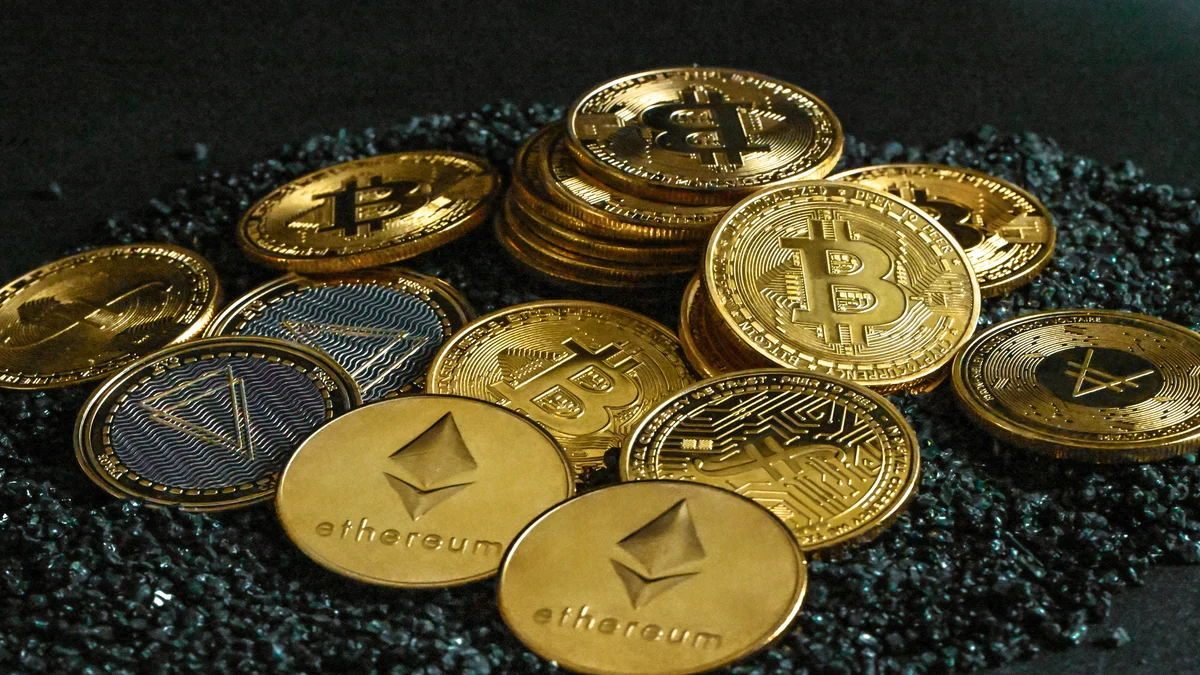
Franklin Templeton, the $1.6 trillion asset management giant, unveiled a significant institutional commitment to XRP in late 2025, launching the Franklin XRP Trust (XRPZ) on NYSE Arca and publicly endorsing the digital asset as a foundational component of global payment infrastructure.
The move marks a watershed moment for the cryptocurrency sector, demonstrating how regulatory clarity and real-world utility are reshaping institutional evaluation of blockchain-based assets.
The XRPZ ETF, which debuted on November 24, 2025, represents far more than a conventional product launch. For the first time, United States investors gained direct regulated exposure to XRP through a traditional brokerage account, eliminating operational complexity that historically deterred institutional participation.
The structure exemplifies how legacy financial institutions are modernizing digital asset access: the fund operates as a grantor trust holding XRP, with daily net asset valuations calculated through established CME reference rates, custody provided by Coinbase Custody Trust Company, and administration by BNY Mellon. This architecture meets institutional risk management requirements, addressing a critical adoption barrier that had previously limited institutional participation.
The underlying investment thesis reflects a fundamental reorientation in how institutional investors evaluate digital assets. Roger Bayston, Franklin Templeton's Head of Digital Assets, articulated the firm's positioning with precision: XRP Ledger functions as a "payments-first blockchain enabling real-time, low-cost settlement and cross-border transaction efficiency." Within a diversified digital portfolio, Bayston explained, XRP represents a "foundational building block" alongside Bitcoin and Ethereum ETFs.
This language signals institutional legitimacy—the asset is evaluated for functional utility in global payments infrastructure, not speculative price appreciation.
The distinction proves critical. For years, institutional investors viewed XRP as a speculative bet entangled in regulatory ambiguity stemming from the SEC's 2020 lawsuit alleging unregistered securities sales.
The August 2025 settlement, which resolved the five-year legal cloud without requiring Ripple to admit wrongdoing, fundamentally shifted that calculus. XRP could now be evaluated purely on its technical merits and economic utility, not regulatory classification risk.
Franklin Templeton's strategic focus on XRP's payment capabilities anchors to measurable real-world adoption. The XRP Ledger, a decentralized blockchain launched in 2012, processes transactions at speeds unavailable to traditional banking infrastructure—settlement occurs within 3-5 seconds using a federated consensus model that consumes significantly less energy than proof-of-work systems.
This technical foundation has generated substantial transaction volume: RippleNet, Ripple's institutional payment network, processed over $15 billion in transaction volume annually as of 2024, growing 32 percent year-over-year, with 56 percent of activity originating in the Asia-Pacific region.
Ripple's On-Demand Liquidity (ODL) service, which utilizes XRP for real-time currency conversion between different fiat currencies, demonstrates the token's practical application.
Forty percent of RippleNet's 300+ financial institutions across 55+ countries employ ODL, with cost advantages that are commercially compelling: ODL reduces cross-border transfer fees to approximately one-tenth of traditional SWIFT costs, which typically range from 3 to 5 percent per transaction. This is not theoretical efficiency—it represents measurable savings for financial institutions processing international transfers daily.
The November 2025 partnership between Ripple and Mastercard underscored XRP's evolution toward regulated institutional use cases. The collaboration involved settling credit card transactions using RLUSD, Ripple's US-dollar-backed stablecoin, on the XRP Ledger.
This pilot program illustrated how XRP infrastructure could integrate with established payment systems, a significant validation for institutions evaluating whether blockchain-based solutions could complement rather than disrupt existing operations.
Franklin Templeton's broader digital asset expansion contextualizes its XRP commitment. The firm now manages four cryptocurrency-focused ETFs: Bitcoin (EZBC), Ethereum (EZET), XRP (XRPZ), and a diversified digital asset fund (EZPZ).
According to David Mann, Franklin's Head of ETF Product and Capital Markets, XRP "plays a foundational role in global settlement infrastructure," a statement that positions the asset within the firm's long-term digital asset strategy rather than as a tactical opportunity.
The ETF's market reception validated institutional demand. Within days of launch, XRPZ attracted substantial capital flows, accumulating over $242 million in cumulative inflows and acquiring holdings exceeding 100 million XRP tokens by year-end.
More broadly, the XRP ETF ecosystem—including products from Bitwise, Grayscale, and Canary Capital—generated $1.16 billion in net inflows over consecutive days in late 2025, a striking figure given the broader cryptocurrency market environment.
Yet the capital inflows into XRP ETFs have not translated into sustained price appreciation, creating a curious market dynamic. The token reached an all-time high of $3.66 in July 2025, shortly after the SEC settlement announcement, but subsequently declined more than 40 percent to trading levels near $1.80-$2.20 by year-end.
Institutional demand through ETF vehicles exists, but retail investor interest has waned, creating a structural disconnect between institutional adoption metrics and market price performance.
This divergence illuminates an important market transition. Franklin Templeton's investment reflects institutional confidence in XRP's long-term utility as global payment infrastructure, not confidence in rapid price appreciation.
The firm's positioning emphasizes XRP's low correlation with Bitcoin and Ethereum—a statistical reality that enhances its diversification value in institutional portfolios—alongside its established market capitalization and liquidity, both prerequisites for multi-billion-dollar institutional allocations.
Ripple's own expansion strategy reinforces the infrastructure narrative. In November 2025, the company secured $500 million in financing from institutional investors including Citadel Securities, Fortress Investment Group, Galaxy Digital, and Pantera Capital, achieving a $40 billion valuation.
More significantly, Ripple deployed capital toward institutional-grade infrastructure: the company acquired Hidden Road for $1.25 billion to create Ripple Prime, a crypto-native global prime brokerage; acquired GTreasury for $1 billion to expand treasury management capabilities; and acquired Rail, a cross-border payment infrastructure firm, for $200 million. These acquisitions—totaling over $2.7 billion in 2025—transformed Ripple from a software company into a full-service financial infrastructure provider capable of competing directly with traditional Wall Street institutions for institutional clients.
Franklin Templeton's collaboration with DBS Bank, announced alongside the XRPZ launch, further validates this institutional infrastructure thesis.
The partnership focuses on developing tokenized trading and lending solutions on the XRP Ledger, moving beyond simple payment settlement toward sophisticated financial products. Such collaboration would be unthinkable without institutional conviction in the underlying asset's viability.
The institutional shift toward XRP reflects broader maturation within the cryptocurrency sector. Rather than evaluating digital assets through speculative frameworks—technology risk, adoption curves, competitive dynamics—institutional investors increasingly analyze them as functional components of financial infrastructure.
By this analytical standard, XRP's low transaction costs, rapid settlement times, and established adoption among financial institutions make it arguably more sophisticated than newer blockchain platforms. The asset's technical limitations are irrelevant to institutions caring only about settlement efficiency and regulatory compliance.
Franklin Templeton's institutional commitment will likely accelerate this reorientation. As one of Wall Street's oldest institutions—founded in 1947 and managing trillions across equities, fixed income, and multi-asset strategies—Franklin Templeton's endorsement carries signal value that extends far beyond its individual ETF flows.
Other financial institutions monitoring competitive positioning will note that a $1.6 trillion asset manager has positioned XRP as foundational infrastructure rather than speculative asset, potentially triggering competitive response from other institutional asset managers seeking digital asset exposure.
The question confronting market participants concerns whether institutional infrastructure adoption will eventually translate into price appreciation. Historical cryptocurrency experience suggests asset price appreciation typically follows infrastructure adoption with a lag—network effects accelerate, competitive threats decline, utility economics improve, and market breadth expands.
Yet this narrative assumes sustained institutional demand and macroeconomic conditions supportive of risk asset appreciation. The divergence between Franklin Templeton's institutional commitment and the broader market's price weakness suggests that XRP's institutional utility case may take years to fully manifest in valuation multiples, with investors requiring patience for real-world payments adoption to drive demand sufficient to support higher valuations.